
Ancient Mural of the 12 Chinese Zodiac Animals Features a Cat Instead of a Snake
4 min readAncient Mural Sparks Buzz: 12 Chinese Zodiac Animals Feature a Cat Instead of a Snake in 2025, the Year of the Snake
As 2025—the Year of the Snake—arrives, many people have been checking their zodiac fortunes. Recently, however, an ancient mural of the “Twelve Zodiac Animals” from over a thousand years ago has gone viral. Shockingly, the snake (this year’s zodiac animal) is completely missing and has been replaced by a completely unexpected animal—a cat. Netizens immediately started joking:
“Snake-year people are having a meltdown!”
“When did I turn into a cat?!”
“Am I a snake or a cat now??” 😂

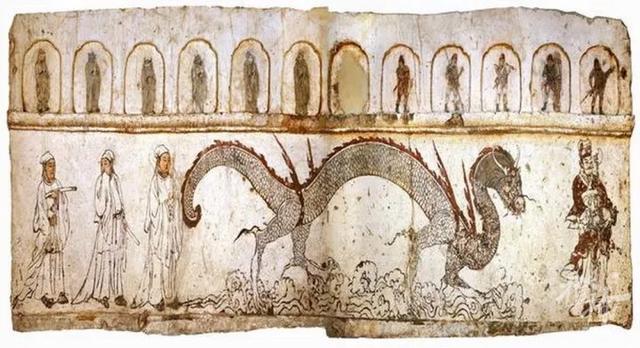
The mural, currently on display at Yuelu Academy in Changsha, Hunan Province, comes from the Weishan Ancient Tomb in Xinhua County, Hunan. Titled “Twelve Zodiac Animals,” it shows the twelve figures dressed as ancient civil officials, holding ceremonial tablets (hu boards), and arranged in this order:
monkey, pig, rooster, tiger, horse, sheep, dog, cat, ox, dragon, rat, rabbit.
This sequence differs dramatically from the modern Chinese zodiac, and most strikingly, the snake has been replaced by a cat. Experts believe the tomb dates to the Song Dynasty (over 1,000–1,300 years ago), most likely the Southern Song period, though the tomb owner’s identity remains unknown.

Xie Yifeng, associate professor and head of the History Department at Yuelu Academy, Hunan University, clarified:
“There is no historical evidence that the cat ever ‘briefly’ appeared in the official twelve zodiac animals.”
Located on the fringes of core Han Chinese civilization, this “cat replacing snake” is merely a rare local exception, not a widespread tradition. The mural’s “cat-vs-snake controversy” likely reflects that regional peculiarity.
One of the earliest complete records of the twelve zodiac animals appears in Wang Chong’s Eastern Han dynasty work Lunheng, which clearly matches the twelve animals we know today with the twelve earthly branches. However, the zodiac system is fundamentally about the earthly branches themselves—the specific animal is secondary. In earlier periods, some branches corresponded to “insects,” “deer,” or even non-animals such as “water,” “fire,” or “jade.” Using a cat instead of a snake is extremely rare in Tang and Song tomb artifacts; high-status tombs still consistently used the snake.

Professor Xie further explained: “In reality, the ancients gave rich symbolic meanings to the twelve earthly branches. For example, ‘Zi’ corresponds to water in the Five Elements, the rat among animals, and north in direction. Over time, these evolved into the animal guardians of the twelve-year cycle. Yet in Qin dynasty bamboo slips—earlier than the Eastern Han—‘Si’ (now the snake) was recorded as corresponding to ‘insects,’ not a snake. For unknown reasons, it was later changed to snake. The fact that ancient Hunan tombs show cats but no snakes indicates that, in local belief, the animal for the ‘Si’ branch was the cat.”

The Weishan area was historically known as Meishan. Only in the mid-Song dynasty did it come under direct central Chinese rule, allowing it to adopt the high-status tomb styles popular in the Central Plains. Meishan was (and still is) a settlement area for ethnic minorities, particularly the Yao people. Many minority groups there retain clothing and lifestyles that have changed little in 2,000 years, making them inheritors of ancient traditions. From this perspective, the version with a cat and no snake could actually be the older, more “authentic” one.
So why did the cat disappear later?

There are many versions of the zodiac origin story, and in most of them the rat is portrayed as clever and cunning—laying the groundwork for the famous cat-rat feud. Experts point out that cats were not native to China; domestication only became widespread from the Wei-Jin period onward, when they were introduced from West Asia and North Africa. This historical timing has led netizens to joke: “If cats had arrived in China a little earlier, we might really have had a Year of the Cat!”

In 1906, French scholar Édouard Chavannes proposed in his work on the Turkic twelve-animal cycle that the Chinese zodiac may have originated from the Western Regions or Turkic peoples. If it did come from the West, having a cat in the original lineup would make perfect sense.

As for why Vietnam replaced the rabbit with a cat, it is most likely because the earthly branch “Mao” (卯) for rabbit sounds very similar to the Vietnamese word for cat—leading to a simple case of mistaken identity over time.


Thanks for this helpful post. The information shared here is clear and useful. Keep updating
Thanks for this helpfull post, keep posting
Thanks for this helpfull post, keep posting